The orchestration engine for teams who ship
A single platform for orchestrating AI agents, scheduling background tasks, and running mission-critical workflows

'%3e%3cpath%20d='M157.056%2030.302q-5.051%200-7.181-2.766-2.166-2.766-2.165-7.628%200-5.086%202.199-7.714%202.182-2.63%207.078-2.629%205.05%200%207.148%202.629%202.078%202.662%202.078%207.68%200%20.703-.085%201.288H151.3v-2.543h10.721q-.155-3.42-1.271-4.81-1.34-1.53-3.745-1.53-2.354%200-3.814%201.633-1.461%201.614-1.461%206.013%200%204.193%201.426%205.91%201.41%201.752%203.9%201.752zm0-2.715q1.426%200%202.474-.446%201.048-.465%201.615-1.547.567-1.099.876-2.474l3.729%201.031q-.31%202.062-1.427%203.454a6.37%206.37%200%200%201-2.834%202.044q-1.702.653-4.433.653zM142.262%2030.13V3.157h4.14V30.13zM135.499%2030.13V9.754h4.159V30.13zm0-26.097h4.159v3.35h-4.159zM129.006%2030.37q-2.388%200-4.02-1.03-1.615-1.048-1.615-3.814V12.658h-4.742V9.77h4.742V5.15h4.158V9.77h6.596v2.887h-6.596V24.58q0%201.803.755%202.388.757.584%202.114.584%201.254%200%202.456-.412v2.783a16.2%2016.2%200%200%201-3.848.446M100.855%2037.74V9.772h3.23l.911%203.385V37.74zm10.635-7.49q-3.419%200-5.858-1.666-2.44-1.684-2.44-3.557l1.804-2.061q0%201.77%201.495%203.11%201.512%201.322%203.573%201.322%202.2%200%203.436-1.563%201.237-1.581%201.237-5.91%200-4.313-1.237-5.876-1.236-1.58-3.436-1.58-2.061%200-3.573%201.322-1.495%201.323-1.495%203.058l-1.804-2.01q0-1.89%202.44-3.573t5.858-1.684q3.797%200%205.618%202.629t1.821%207.697q0%205.05-1.821%207.696t-5.618%202.646M90.456%2030.302q-5.052%200-7.182-2.766-2.165-2.766-2.165-7.628%200-5.086%202.2-7.714%202.182-2.63%207.078-2.629%205.051%200%207.147%202.629%202.079%202.662%202.079%207.68%200%20.703-.086%201.288H84.7v-2.543h10.72q-.154-3.42-1.27-4.81-1.341-1.53-3.746-1.53-2.354%200-3.814%201.633-1.46%201.614-1.46%206.013%200%204.193%201.426%205.91%201.409%201.752%203.9%201.752zm0-2.715q1.425%200%202.474-.446%201.047-.465%201.614-1.547.567-1.099.877-2.474l3.728%201.031q-.31%202.062-1.426%203.454a6.36%206.36%200%200%201-2.835%202.044q-1.7.653-4.433.653zM76.412%2019.41q0-4.09-.962-5.498-.963-1.425-2.8-1.426-2.097%200-3.316%201.426-1.203%201.408-1.203%203.195l-1.598-1.065q0-2.697%202.08-4.57%202.095-1.89%205.566-1.89%203.642%200%205.016%202.371%201.375%202.355%201.375%207.456zM64.008%2030.13V9.771h3.23l.91%203.814V30.13zM53.163%2038.136q-3.453%200-5.859-1.546-2.405-1.53-2.697-5.275h4.054q.138%201.496.705%202.406.584.91%201.598%201.323%201.03.429%202.336.429%202.165%200%203.47-1.134%201.324-1.116%201.323-4.553V13.895l1.083-4.124h3.075v19.62q0%203.35-1.254%205.257-1.237%201.924-3.144%202.698-1.89.79-4.69.79m-1.478-7.886q-3.796%200-5.67-2.611-1.854-2.63-1.855-7.731%200-5.103%201.839-7.714t5.652-2.612q3.418%200%205.824%201.736%202.422%201.718%202.422%203.607l-1.82%201.924q0-1.735-1.478-3.058t-3.54-1.322q-2.181%200-3.453%201.563-1.254%201.546-1.254%205.893t1.254%205.91q1.272%201.563%203.454%201.563%202.061%200%203.539-1.34%201.477-1.34%201.477-3.092l1.838%202.061q0%201.924-2.405%203.574-2.388%201.65-5.824%201.65M22.869%204.741l-6.997%206.3-4.834%204.135%206.221%205.82%206.515-5.572-5.045-4.72%205.358-4.823%2010.426%209.752-17.5%2014.966L.298%2014.966%2017.8%200zM34.88%2017.267%2017.896%2032.032v7.943l16.986-14.764zM16.46%2032.002%200%2016.652v7.944l16.46%2015.349z'/%3e%3c/g%3e%3cdefs%3e%3cclipPath%20id='clip0_2016_2990'%3e%3cpath%20fill='%23fff'%20d='M0%200h166.322v40H0z'/%3e%3c/clipPath%3e%3c/defs%3e%3c/svg%3e)






Build, deploy, and scale reliable applications.
#50M
Tasks run daily on Hatchet Cloud4#MS
Average start latency / task50#7#+
Active projects running on HatchetBackground tasks
Background tasks which are defined as simple functions.
Retries
Retries with flexible and configurable policies, such as exponential backoff.
Scheduled tasks
Scheduled tasks for a specific time in the future
Cron jobs
Cron jobs for running tasks on a regular schedule
Task routing
Task routing based on strict conditions, like worker labels, or more complex, weighted scheduling rules using worker affinity
Event triggers
Event triggers and listeners to build event-driven, highly distributed systems
Webhook triggers
Webhook triggers for Hatchet tasks from upstream data sources
Durable tasks
Durable tasks for building fault-tolerant, long-running workflows which can easily recover from failure
Complex conditions
Complex conditions for pause/resume workflows using durable sleep, event waits, or a combination of both
DAGs
DAGs for building data pipelines and simple workflows. See our guide on choosing between durable tasks and DAGs
Priorities
Priorities so that critical tasks can run before tasks which aren't latency sensitive, like backfill jobs
Rate limits
Rate limits, which can be configured statically (for third-party APIs) or dynamically (for per-user limits).
Global deployments
Global deployments across the US and EU.
Fair scheduling
Fair scheduling using Hatchet's concurrency policies, to prevent any single user from monopolizing resources.
Worker slots
Worker slots for ensuring that workers cannot take on more work than they can handle
Real-time web UI
Real-time web UI with alerting, monitoring, and logging
OpenTelemetry
OpenTelemetry using Hatchet's built-in collector or external destinations
Prometheus metrics
Prometheus metrics for monitoring Hatchet instances
User Management
User Management with support for multiple roles and permissions
Monitor & Troubleshoot
Use Hatchet as a centralized platform for observability, logging, monitoring, and alerting. Forward your OpenTelemetry traces and spans to your preferred observability stack.
Task & workflow monitoring
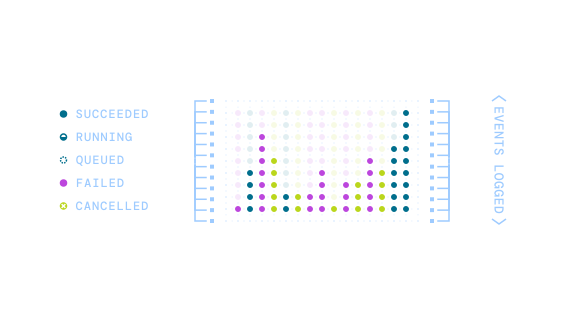
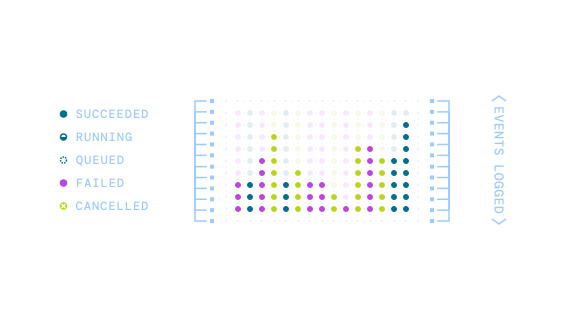
Get a complete picture of every workflow, task, and event in your system. Status updates and metrics are real-time and searchable for easy debugging.
Task & workflow monitoring
Get a complete picture of every workflow, task, and event in your system. Status updates and metrics are real-time and searchable for easy debugging.
OpenTelemetry tracing
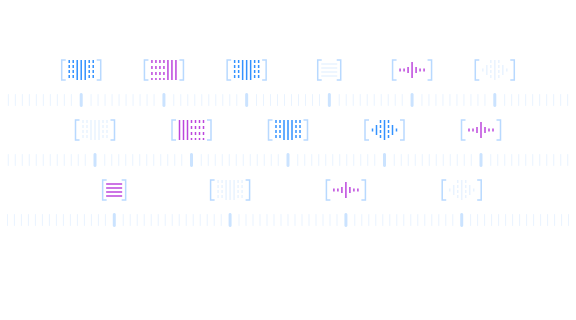
Hatchet’s built-in OpenTelemetry collector provides a complete set of traces and spans for every task and workflow execution.
OpenTelemetry tracing
Hatchet’s built-in OpenTelemetry collector provides a complete set of traces and spans for every task and workflow execution.
Logging
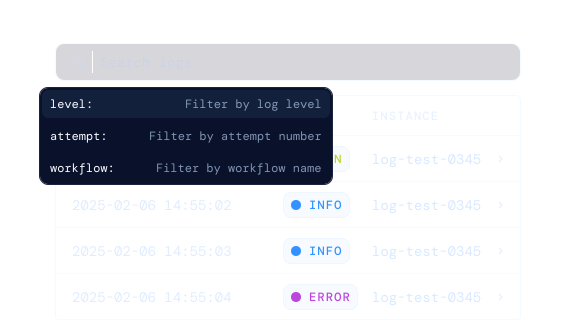
Send application logs directly to Hatchet, with support for full-text search and complex filtering.
Logging
Send application logs directly to Hatchet, with support for full-text search and complex filtering.
Composable Primitives
Hatchet provides native SDKs across TypeScript, Python, and Go to write idiomatic, production-ready code. You can easily compose Hatchet’s primitives into more complex patterns and workflows suited to your organization’s needs.
XyZ+*O 0+$_+ xQ| $ QRx*T+&_0*Yz|T|*$*^y*+y#Ox y+#|T__*%^^x
  xTy*z ^%T&z+Q&#
R+x$ hatchet skills install ▌
==========================
Installing skills...
› hatchet server start▌ Composable Primitives
Hatchet provides native SDKs across TypeScript, Python, and Go to write idiomatic, production-ready code. You can easily compose Hatchet’s primitives into more complex patterns and workflows suited to your organization’s needs.
XyZ+*O 0+$_+ xQ| $ QRx*T+&_0*Yz|T|*$*^y*+y#Ox y+#|T__*%^^x
xTy*z ^%T&z+Q&#
R+xSupports your stack
Deploy idiomatic, modern code in TypeScript, Python or Go.
$ hatchet skills install ▌
==========================
Installing skills...
Integrates with your coding agents
Works with Claude Code, Cursor, and more.
› hatchet server start▌ Open-source & self-hostable
Fully MIT-licensed. Running Hatchet locally is a single CLI command away.
Runs anywhere containers run
Run Hatchet on Kubernetes, Docker, or other container-based platforms.
Use Cases
Replaces your home-grown cron systems, legacy data pipelines, and overly complex orchestration providers with a single, easy-to-use platform.
How it Works
There are two components to running Hatchet: the orchestration engine and your workers. Workers run on your own infrastructure, while the Hatchet orchestration engine is available as a managed service or can be self-hosted.
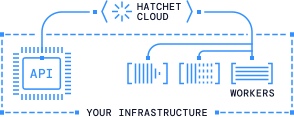
Step 1
Write tasks and workflows as code.
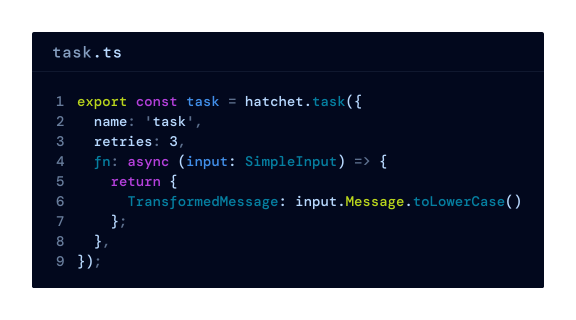
Tasks are simple functions. They can be composed into workflows to represent more complex logic. Your tasks automatically retry on failure and handle complex dependencies between steps.
Step 1
Write tasks and workflows as code.
Tasks are simple functions. They can be composed into workflows to represent more complex logic. Your tasks automatically retry on failure and handle complex dependencies between steps.
Step 2
Invoke your tasks and workflows.
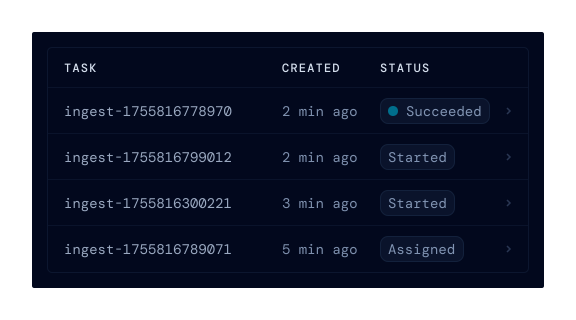
Start workflows from your API, schedule them to run at specific times, or trigger them when events happen. Tasks run immediately or queue up for later.
Step 2
Invoke your tasks and workflows.
Start workflows from your API, schedule them to run at specific times, or trigger them when events happen. Tasks run immediately or queue up for later.
Step 3
Run workers in your own cloud.
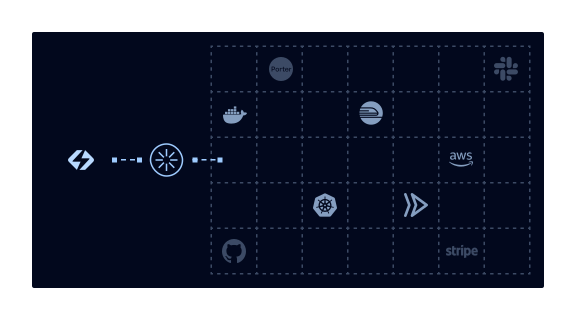
Deploy workers on Kubernetes, Porter, Railway, Render, ECS, or any container platform. They automatically connect to Hatchet and can scale up or down based on workload.
Step 3
Run workers in your own cloud.
Deploy workers on Kubernetes, Porter, Railway, Render, ECS, or any container platform. They automatically connect to Hatchet and can scale up or down based on workload.
Step 4
Monitor and replay.
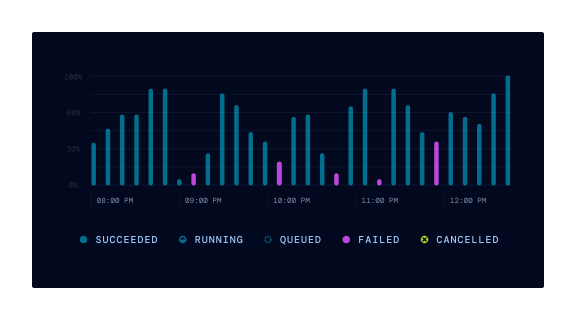
See all your worksflows in the dashboard, get alerts when tasks fail, and export metrics to your monitoring tools. Full visibility (and control) without extra setup.
Step 4
Monitor and replay.
See all your worksflows in the dashboard, get alerts when tasks fail, and export metrics to your monitoring tools. Full visibility (and control) without extra setup.


 Athos CoutoEnter
 Alex LeonovDocsum
 Tim SuDistill
 Aaron BanninPaxAI
 Meji AbidoyeOtto
 Andrew LawsonProhostAI
 Shaun BerrymanMoonhub
 Josh FaustHappenstance
 Ymir EgilsonAevy
 Soohoon ChoiGreptile
 Richard HeOpenmart
 Noah ÖhrnerKenley
 Josh KarolCrowdVolt
 Cory LiSpellbrush
 Vere WhittomeKaylie.ai
 Tim Suchanekexpand.ai
Get started for free today. No credit card required and your first 100,000 runs are on us.
Durable execution without the overhead, backed by Postgres.
Long-running workflows, AI agents, and parallelization at scale.
Pause and resume tasks on workers at any point.
Open-source. Use Hatchet Cloud for free, or self-host without restrictions.